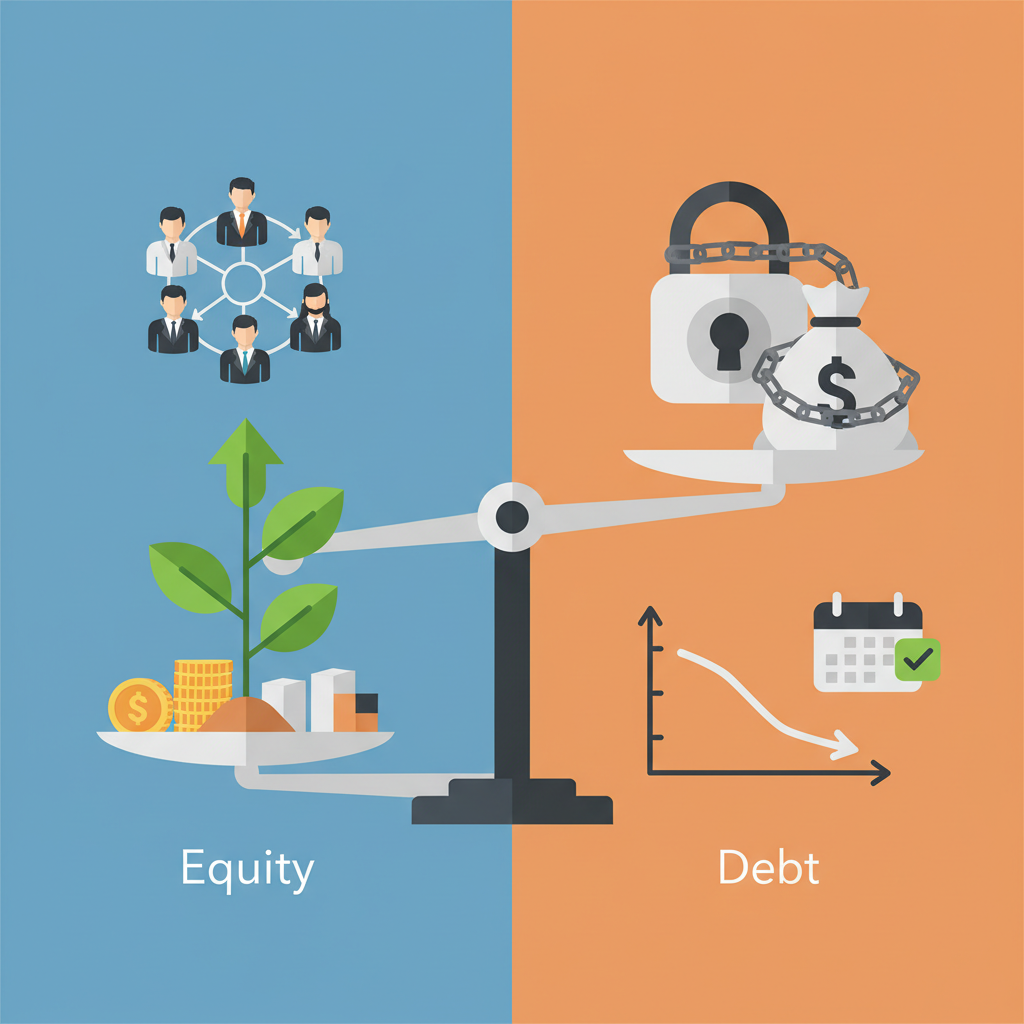
Are you an investor looking to diversify your portfolio and give meaning to your investments while targeting potentially high returns? Equity crowdfunding represents a modern and dynamic opportunity to finance SMEs and invest directly in the real economy. This article will guide you through its mechanics, benefits, and the precautions you should take.
The mechanics of equity crowdfunding allow investors to acquire equity stakes in unlisted SMEs via online platforms. It is a method of equity crowdfunding financing for companies and a diversified investment vehicle for individuals, offering significant potential returns but also equity crowdfunding risks related to liquidity and the long-term viability of startups.
Equity Crowdfunding: How to Finance SMEs through Crowdsourcing?
1. Understanding Equity Crowdfunding: Equity Crowdfunding Financing
Equity crowdfunding, often referred to as investment-based crowdfunding, is a fundraising method where many investors contribute small amounts of money in exchange for shares in a company, typically an SME or a startup. Unlike crowdlending or donation-based crowdfunding, the investor becomes a shareholder, sharing in the company's successes (and failures). This model democratizes investment in high-potential companies that were previously reserved for institutional investors or business angels. It relies on recognized crowdfunding platform reviews that act as intermediaries, facilitating the connection between project owners and investors.
2. How Equity Crowdfunding Works in Practice
The mechanics of equity crowdfunding are relatively straightforward for the investor. It begins with selecting a licensed platform that offers corporate projects.
- Project Selection: Platforms conduct rigorous due diligence on candidate companies, evaluating their business model, market, team, and financial projections.
- Presentation to Investors: Each project is presented via a dedicated page, including a detailed business plan, videos, financial documents, and investment terms (minimum amount, company valuation, type of shares offered).
- Investment: Investors can commit the desired amount (often starting from a few dozen or hundreds of euros) in exchange for company shares.
- Investment Monitoring: Once the fundraising is successful, the investor becomes a shareholder and can track the company's progress through reports provided by the platform or the company itself. Platforms generally charge the company fees for setting up the campaign and/or commissions on the amounts raised. For the investor, entry fees are often zero or very limited.
3. Benefits of Investing in Small Financial Businesses via Crowdfunding
Investing in equity crowdfunding offers several advantages for the individual investor:
- Diversification: Access to an asset class (shares in unlisted SMEs) that was previously difficult to access, allowing for portfolio diversification.
- Innovation: The opportunity to support innovative projects and participate in economic growth.
- Return Potential: SMEs and startups can generate significant returns in the event of success, although these returns are inherently linked to risk.
- Transparency: Platforms strive to offer high transparency regarding projects and the financial health of companies.
- Purpose and Impact: Investing in local businesses or sectors you care about, thereby having a direct impact on the real economy.
4. Equity Crowdfunding Risks to Know Before Investing
Despite its appeal, equity crowdfunding is not without risks. It is crucial to be aware of them:
- Capital Loss: The primary risk is the total or partial loss of the invested capital. A large number of startups fail.
- Illiquidity: The investment is generally illiquid. There is no organized secondary market to easily resell shares before an exit (company sale, IPO).
- Dilution: Future fundraising rounds may dilute your stake if you do not have the means to participate.
- Lack of Information: Although platforms provide data, access to information may be limited compared to a publicly traded company.
- Absence of Regular Dividends: Young companies often reinvest their profits; it is rare to receive dividends. The return on investment usually occurs during a liquidity event.
5. How to Choose a Reliable Crowdfunding Platform Review?
The choice of platform is paramount. Here are criteria to consider:
- Licensing and Regulation: Ensure the platform is regulated by competent authorities (e.g., the AMF in France).
- Track Record and Reputation: Look for online crowdfunding platform reviews, check their history, the number of projects funded, and their successes (and failures).
- Project Quality: The quality of the selection of proposed companies is a key indicator of the platform's reliability.
- Transparency: A good platform offers clear and comprehensive information on projects, fees, and risks.
- Investor Support: Responsive and competent customer service is an asset.
6. Strategies for Successful Investment
To maximize your chances of success, follow these recommendations:
- Diversification: Never invest too large a sum in a single company. Spread your investments across several projects and sectors.
- Understand the Sector: Invest in companies whose business model, market, and potential you understand.
- Personal Due Diligence: Do not rely solely on the platform's information. Analyze the documents and ask questions.
- Long-Term Investment Horizon: Be prepared to lock up your capital for several years (5 to 10 years).
- Do Not Invest Money You Need: Only invest funds whose total loss would not affect your financial situation.
| Criterion | Benefit of Equity Crowdfunding | Associated Risk Level |
|---|---|---|
| Accessibility | Democratizes SME investment | Low (initial investment) |
| Gain Potential | High returns if successful | High (capital loss) |
| Diversification | Access to a new asset class | Medium (if portfolio is diversified) |
| Direct Impact | Support for the real economy | Low (moral satisfaction) |
| Liquidity | // | Very high (illiquidity) |
- Not diversifying investments: Concentrating all funds in a single company drastically increases the risk of total loss.
- Ignoring illiquidity risks: Expecting to recover money quickly is a mistake; the investment horizon is long.
- Failing to perform personal due diligence: Blindly trusting platform information without verifying or deepening the analysis.
- Set your investment budget and define a portion reserved for risky placements.
- Research and compare several regulated crowdfunding platform reviews (AMF in France).
- Register on a platform and familiarize yourself with current projects.
- Select 3 to 5 projects in different sectors to begin your diversification.
- Autorité des Marchés Financiers (AMF) | https://www.amf-france.org/
- France FinTech | https://francefintech.org/
- Fédération des Plateformes de Financement Participatif | https://financeparticipative.org/
What is the minimum amount to invest in equity crowdfunding? The minimum amount varies by platform and project, but it is often possible to invest starting from 50 to 100 euros, making the investment accessible to a wide audience. How long must I "lock up" my money in equity crowdfunding? The investment horizon is generally 5 to 10 years, or even longer. Shares are illiquid, and the wait for an "exit" (company sale, IPO) can be long. Are interests on equity crowdfunding guaranteed? In equity crowdfunding, you are not investing for interest but for equity shares. There is no guarantee of return or capital gain. Your return on investment will depend on the future performance of the company.